Problem
Most CRMs are standalone systems. They store contacts, track deals, and send emails. But they live outside the business automation layer.
Teams end up stitching CRM, support, chat, and engineering tools together with manual workflows and fragile integrations. AI becomes an add-on instead of a native capability, and automation stays scattered across tools.
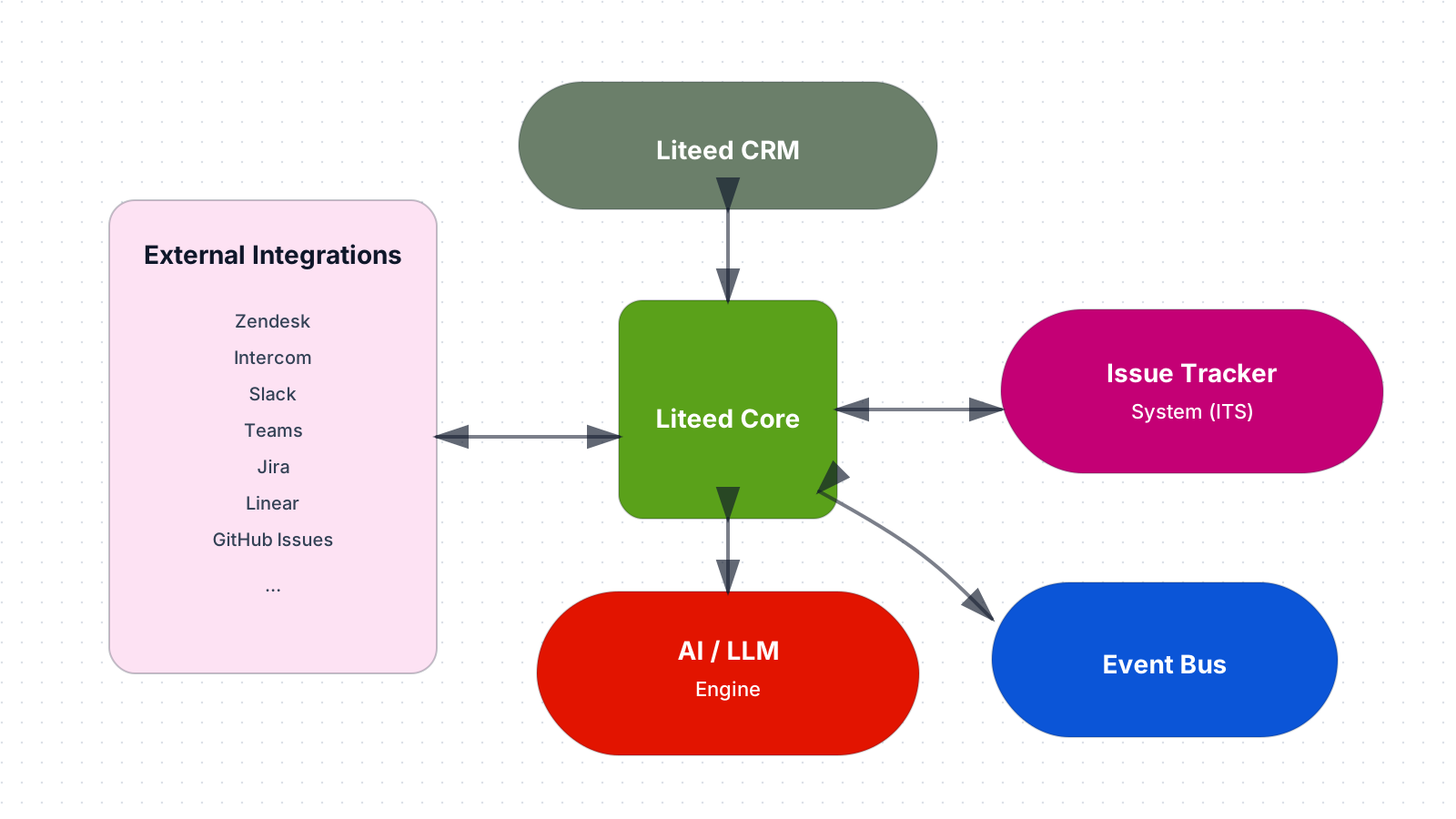
Liteed CRM built natively on the Liteed Automation Core, designed as an AI automation tool foundation.
What Liteed CRM Is
Liteed CRM is a minimalist CRM built directly on the Liteed Automation Core. It is not a separate SaaS product. It operates inside the automation infrastructure and supports business automation end-to-end.
- Contact and organization management
- Email scheduling and follow-ups
- Event-driven workflows for business automation
- Native AI support as part of the platform
- Integration adapters for external systems
Architecture Approach
The core idea is simple: CRM actions produce events. Those events flow through the automation core. AI, routing, tracking, and integrations react to those events.
Instead of building point-to-point integrations, Liteed CRM relies on a central event bus and modular adapters. External systems become replaceable components, and your business automation workflows stay portable.
AI as a Native Layer
AI is not bolted on. It is part of the core. This makes Liteed CRM an AI automation tool for daily CRM work.
- Email draft generation and follow-up generation
- Contact enrichment and account summaries
- Structured notes, summaries, and next steps
- Workflow recommendations for CRM automation
Because the AI engine operates inside the automation layer, it can access structured events rather than raw disconnected data. This is where business automation becomes reliable and repeatable.
Integrations
Liteed CRM is designed to connect to real-world stacks and automate cross-tool workflows:
- Support systems: Zendesk or Intercom
- Team communication: Slack or Microsoft Teams
- Engineering tracking: Jira, Linear, GitHub Issues
The architecture remains integration-agnostic. Adapters can be replaced without redesigning the core, which keeps your automation stable even when tools change.
Why Minimalist
The goal is not to compete with feature-heavy enterprise CRMs. The goal is to provide a programmable CRM layer for teams that value business automation and want a lightweight AI automation tool.
Minimal surface area. Clear data model. Event-driven workflows. Built for extension, integration, and automation.
Next
Liteed CRM is live and evolving. The next iterations focus on deeper business automation workflows, expanded adapters, and tighter AI orchestration across CRM, support, and engineering.
Platform overview: Liteed Automation Platform