Introduction
Most teams do not have an automation problem. They have a system boundary problem. Automation is often built “here and there” with scripts and tools, while business logic stays fragmented. Every change becomes risky, ownership gets blurry, and operations stay fragile.
An automation core is the opposite approach. One place where workflows live, run, are observed, audited, and rolled back. It is infrastructure for operations.
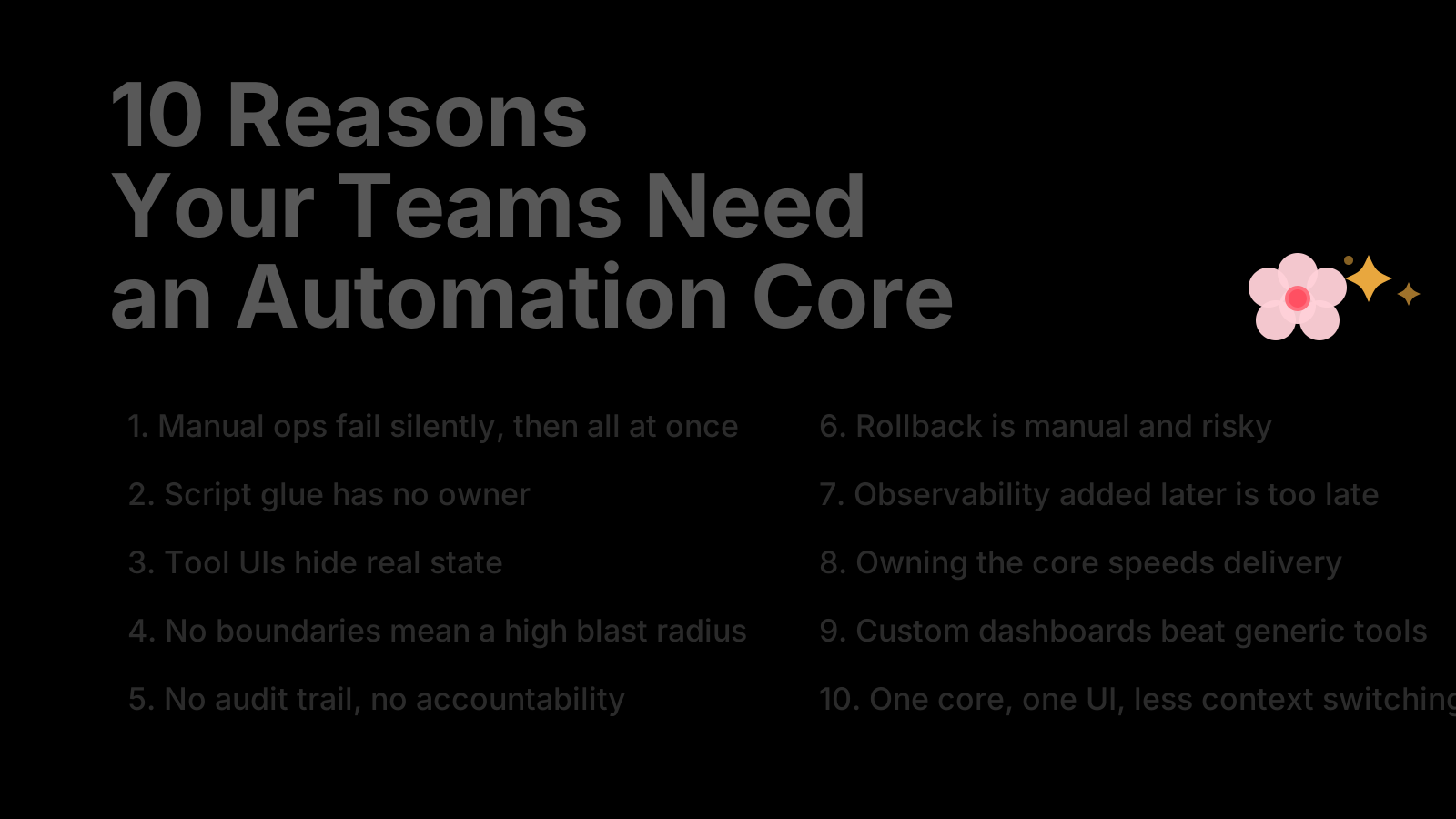
Illustration: 10 reasons teams need an automation core: ownership, observability, rollback, and a single UI instead of brittle tool glue.
10 Reasons Your Teams Need an Automation Core
1. Manual ops do not fail loudly. They fail silently, then all at once.
Small mistakes accumulate as invisible drift: skipped steps, wrong values, missing checks. Then one trigger (volume, change, audit) exposes everything at the same time.
2. Script glue has no ownership.
The logic lives in personal repos, cron tabs, and tribal knowledge. Fixes are reactive, and the bus factor is always one.
3. Tool UIs hide real state.
A UI shows “a workflow”, not the full execution graph and data lineage. When something breaks, diagnosis becomes guesswork.
4. No boundaries mean a high blast radius.
When workflows sprawl across tools, every change has unknown side effects. A safe deploy requires a real system boundary and contracts.
5. No audit trail, no accountability.
It becomes hard to answer: who changed what, when, why, and what it affected. Compliance and incident reviews become stories, not evidence.
6. Rollback is manual and risky.
Without versioned workflows and controlled state, rollback means cleanup by hand. That is slow, incomplete, and often dangerous.
7. Observability added later is too late.
If logs, metrics, and alerts are not first-class, the signals that matter are missed. Failures are discovered through customers, not dashboards.
8. Owning the core speeds delivery.
The same primitives are reused: auth, events, retries, alerts, UI components. Technical debt still grows fast, especially in the LLM-coding era, so discipline matters.
9. Custom dashboards beat generic tools.
Ops needs purpose-built screens: queues, exceptions, approvals, timelines. Vendor UIs force workarounds and distort how work is done.
10. One core, one UI, less context switching.
The biggest UX tax is learning new interfaces and jumping between tools. A shared core reduces cognitive load across the whole company.
Conclusion
This is the reason Liteed Core exists: an automation core for teams and companies.
Follow Liteed for more insights on building digital-first businesses that run on a real core, not tool glue.
For those already following: thank you for the reactions and comments.